What do EPC ratings mean?
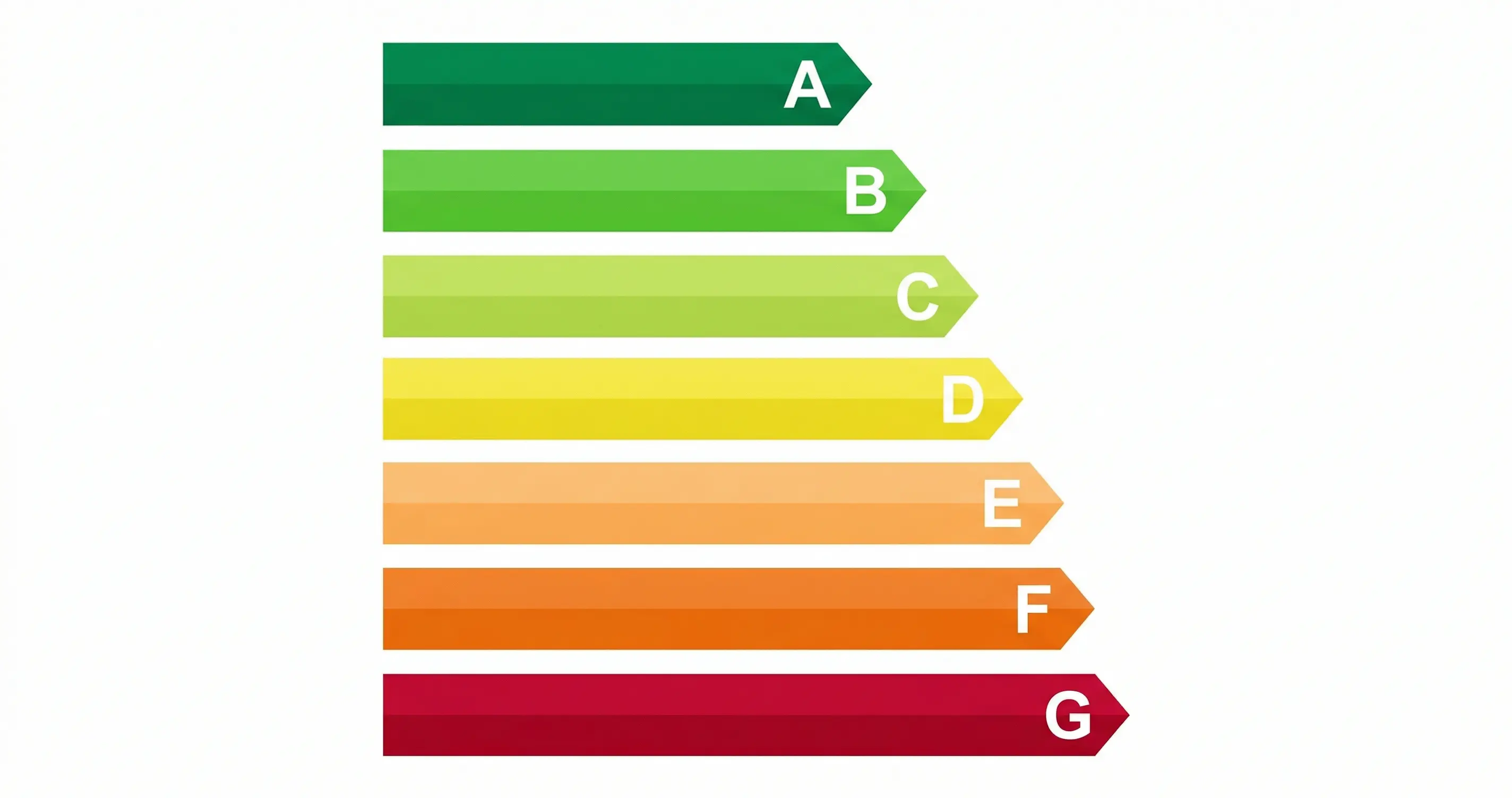
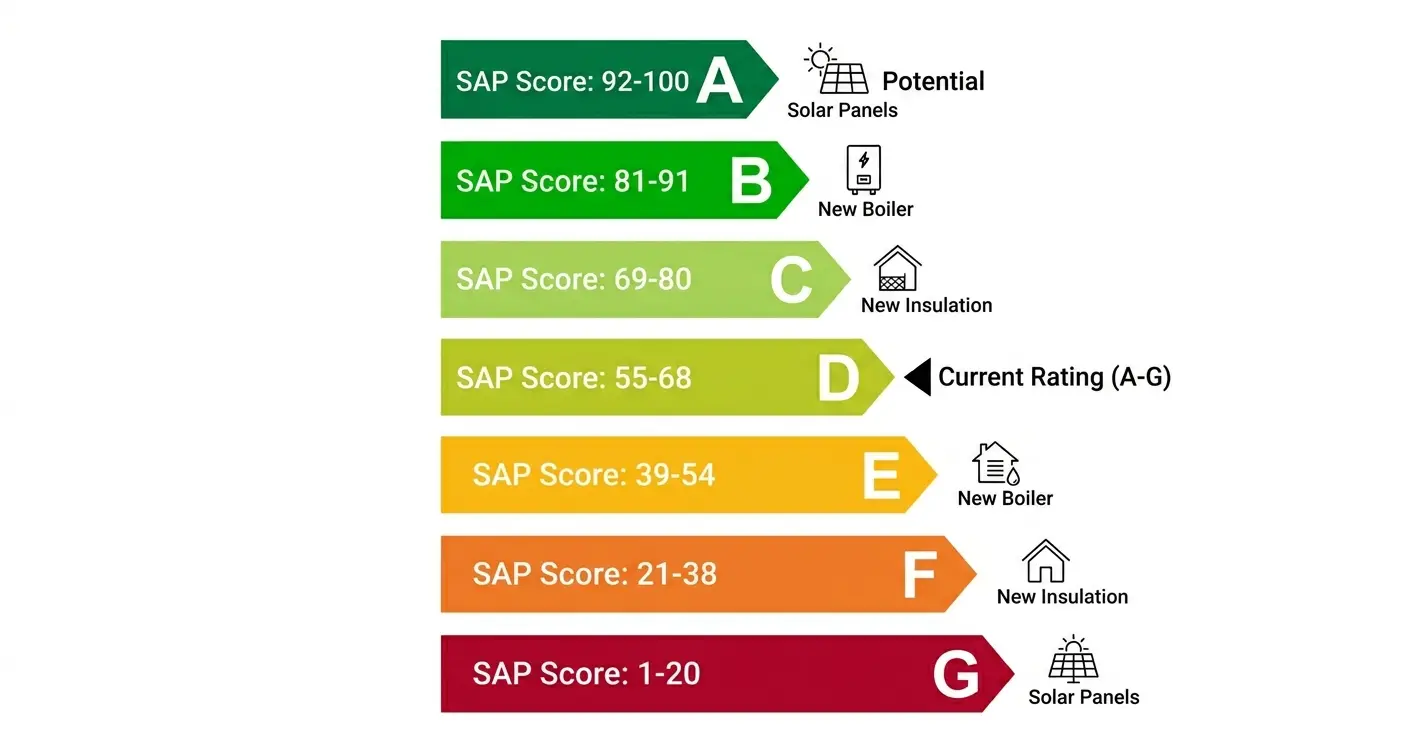
EPC ratings run from A (best) to G (worst). Each letter represents a range of energy efficiency scores from 1 to 100. A higher score means lower energy costs and fewer carbon emissions.
Rating by rating breakdown
Rating A (92–100) — Extremely efficient
These properties have very low energy bills, typically under £500 per year. Almost exclusively modern new builds with features like heat pumps, triple glazing, high levels of insulation, and solar panels. Less than 1% of existing homes in England and Wales have an A rating.
Rating B (81–91) — Very efficient
Annual energy costs around £500 to £800. Found in newer properties built to high energy standards, or older homes that have undergone comprehensive retrofitting. Around 3% of homes have a B rating.
Rating C (69–80) — Efficient
Annual energy costs around £800 to £1,200. This is the government's target standard for all homes. Modern homes built since 2010 often achieve this level. Around 15% of homes are rated C.
Rating D (55–68) — Average
Annual energy costs around £1,200 to £1,600. This is the most common rating in England and Wales. A typical 1960s to 1990s semi-detached house with double glazing and a modern boiler often sits here. Around 40% of homes are rated D.
Rating E (39–54) — Below average
Annual energy costs around £1,600 to £2,100. Older properties with partial improvements. This is the current minimum standard for rental properties. Around 25% of homes are rated E.
Rating F (21–38) — Poor
Annual energy costs around £2,100 to £2,800. Properties with little or no insulation and older heating systems. Cannot be legally rented without an exemption. Around 10% of homes are rated F.
Rating G (1–20) — Very poor
Annual energy costs over £2,800. Extremely uncommon — typically unimproved pre-war properties with no insulation, single glazing, and obsolete heating. Around 2% of homes are rated G.
Note: energy cost estimates above are approximate and based on typical property sizes. Your actual costs depend on property size, usage patterns, and energy tariff.
How your EPC rating affects property value
Research consistently shows that higher EPC ratings correlate with higher property values. Properties rated A or B sell for a premium compared to equivalent properties rated D or E.
A 2024 study by the Department for Energy Security and Net Zero found that improving a home from EPC band D to C added approximately 3% to 5% to the sale price. The effect was more pronounced in lower-value areas.
For landlords, a better EPC rating can also justify higher rents and reduce void periods, as tenants increasingly consider energy costs when choosing where to live.
Most common improvements to move up a band
The improvements that make the biggest difference depend on your current property. But the most frequently recommended upgrades are:
| Improvement | Typical cost | Rating improvement |
|---|---|---|
| Loft insulation (0 to 270mm) | £300 – £600 | 5 – 10 points |
| Cavity wall insulation | £500 – £1,500 | 5 – 15 points |
| New condensing boiler | £2,000 – £3,500 | 5 – 10 points |
| Smart heating controls | £200 – £500 | 2 – 5 points |
| Double glazing (from single) | £3,000 – £7,000 | 5 – 10 points |
| Solar panels | £5,000 – £8,000 | 5 – 15 points |
Moving up one full band typically requires a 10 to 15 point improvement.
Current rating vs potential rating
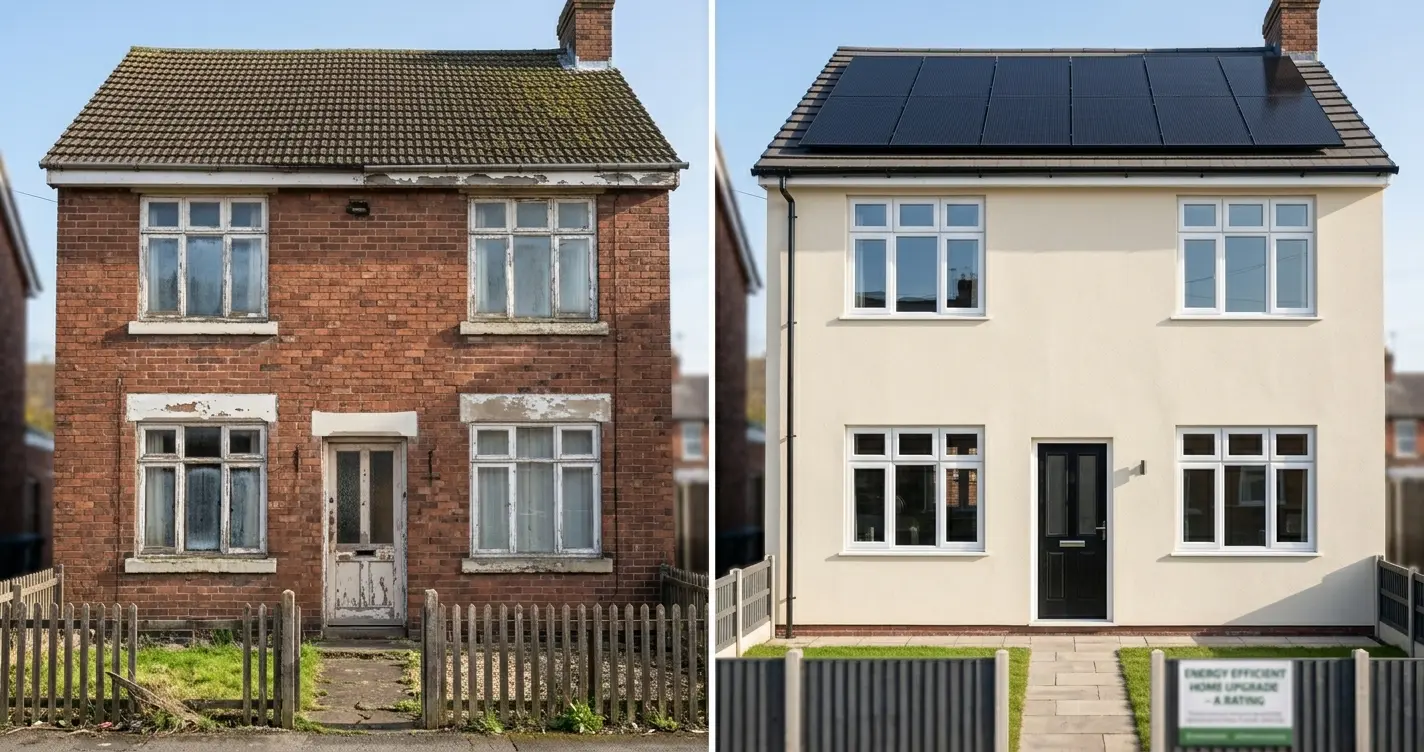
Your EPC shows two ratings: your current rating and your potential rating. The potential rating shows what the property could achieve if all recommended improvements were made.
The gap between current and potential tells you how much room for improvement exists. A property rated D with potential B has significant scope for cost-effective upgrades. A property rated D with potential C has more limited options, possibly because the building fabric makes certain improvements impractical.
What EPC ratings do not measure
EPC ratings are based on the building itself, not how you use it. They do not account for:
- How many people live in the property
- What temperature you heat to
- How often you are at home
- Your energy tariff or supplier
- Appliances and electronics (except fixed lighting)
Two identical houses with the same EPC rating can have very different energy bills depending on the occupants' behaviour.