What is an EPC?
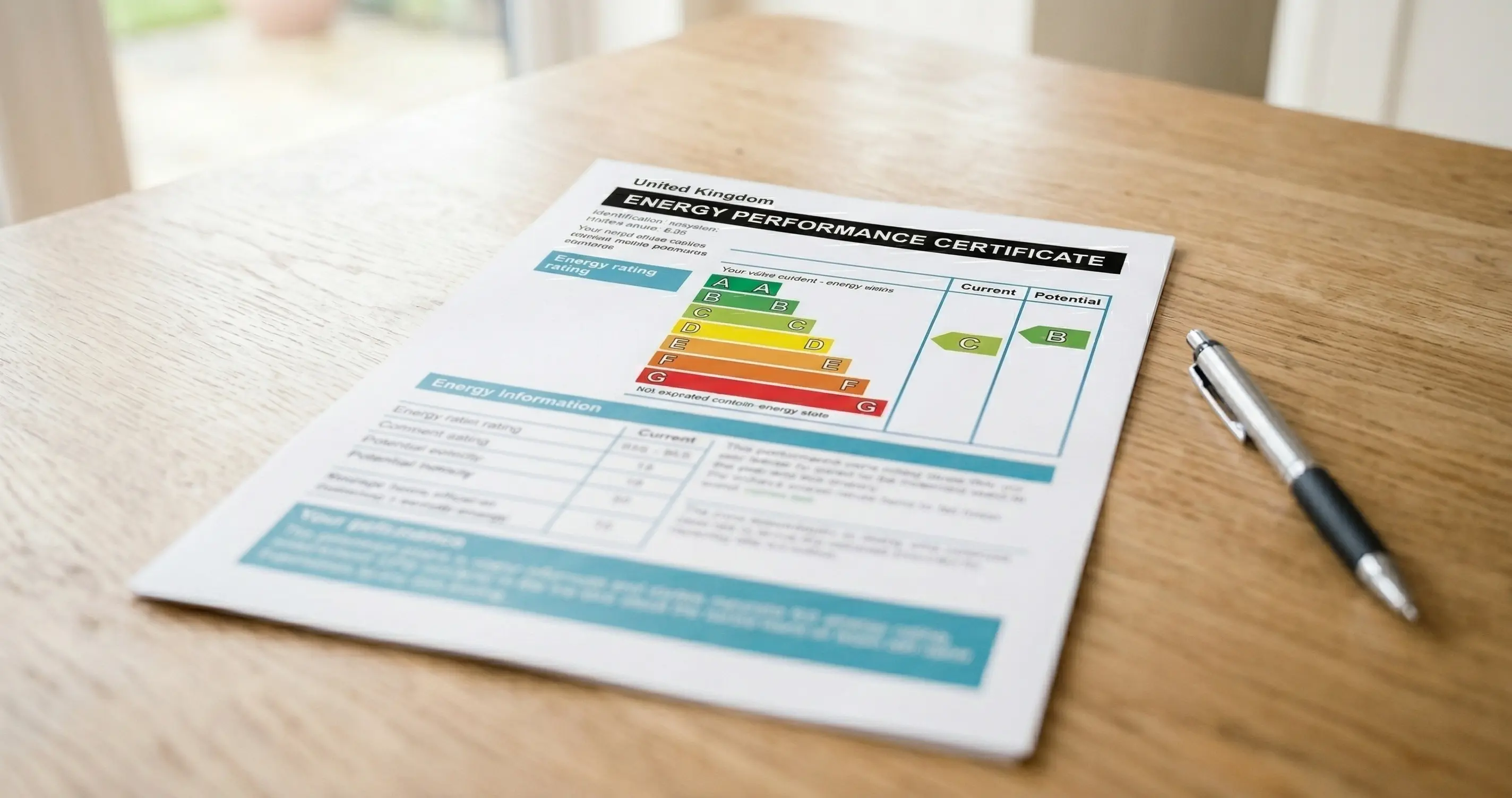
An Energy Performance Certificate is an official document that rates how energy efficient a building is. Every property in England and Wales gets a rating from A (most efficient) to G (least efficient), along with an estimate of energy costs and recommendations for improvement.
Think of it like the energy label on a fridge or washing machine, but for your entire home.
What does an EPC tell you?
An EPC contains several pieces of useful information:
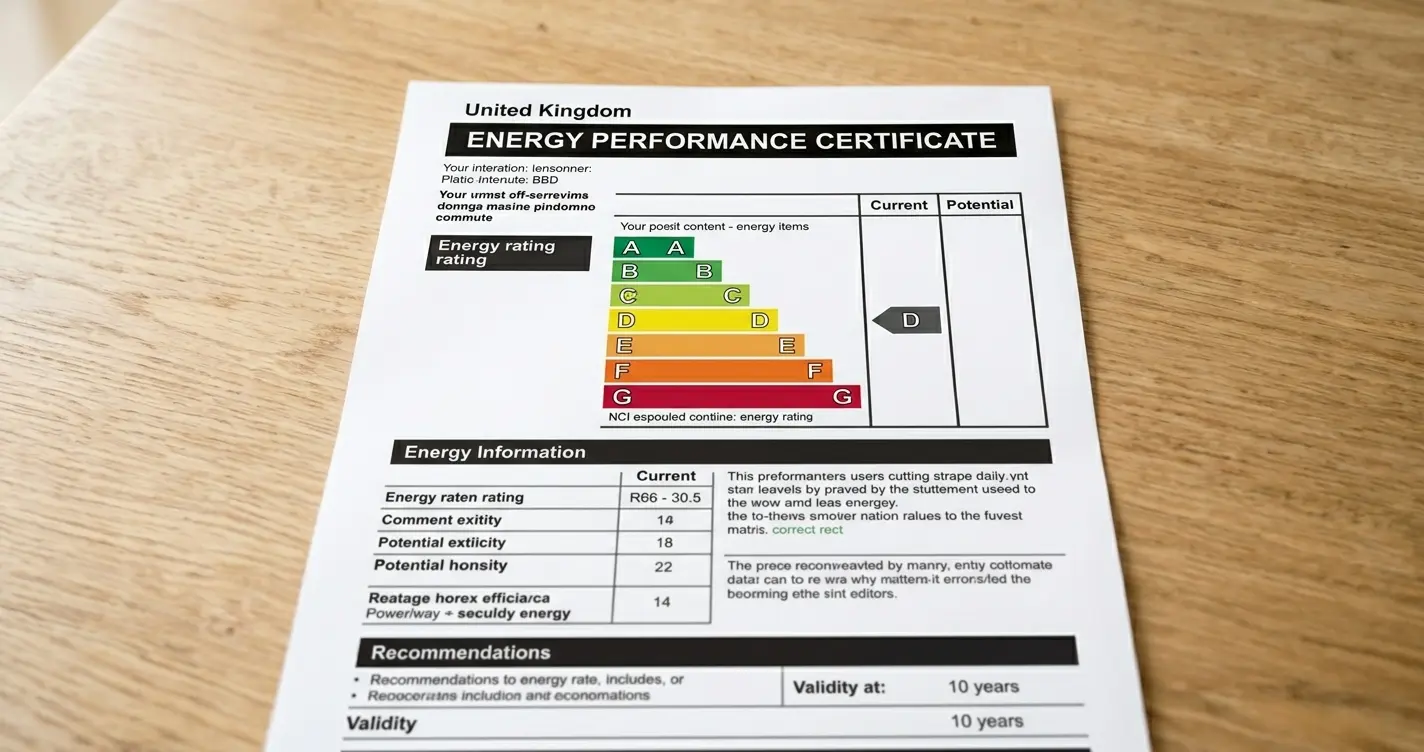
Current energy rating — your property's rating right now, from A to G. Most homes in England and Wales are rated D or E.
Potential energy rating — what your property could achieve if you carried out all the recommended improvements.
Estimated energy costs — how much you might spend on heating, hot water, and lighting per year. This is based on standard assumptions, not your actual usage.
Recommended improvements — a list of changes that could improve your rating, roughly ordered by cost-effectiveness. Common recommendations include loft insulation, cavity wall insulation, and upgrading your boiler.
Environmental impact rating — a separate score based on carbon dioxide emissions rather than cost.
The A to G rating scale
| Rating | Description | Typical property |
|---|---|---|
| A | Extremely efficient | New builds with heat pumps and solar |
| B | Very efficient | Modern homes with good insulation |
| C | Efficient | Government target for all homes |
| D | Average | Most UK homes sit here |
| E | Below average | Older homes with some improvements |
| F | Poor | Unimproved pre-war properties |
| G | Very poor | Rare — minimal insulation, old heating |
The average EPC rating for a home in England and Wales is D. The government wants all properties to reach at least C, and regulations are gradually moving in that direction, particularly for rental properties.
When do you legally need an EPC?
You must have a valid EPC when you:
- Sell a property — the EPC must be available to potential buyers from the point of marketing
- Rent out a property — landlords need an EPC before a new tenancy begins
- Build a new property — the builder must provide an EPC on completion
You do not need an EPC when:
- You are not selling or renting (living in your own home with no plans to move)
- The property is a listed building where improvements would unacceptably alter its character
- The building is a temporary structure used for less than two years
- The property is a standalone building under 50 square metres
How is an EPC assessment carried out?
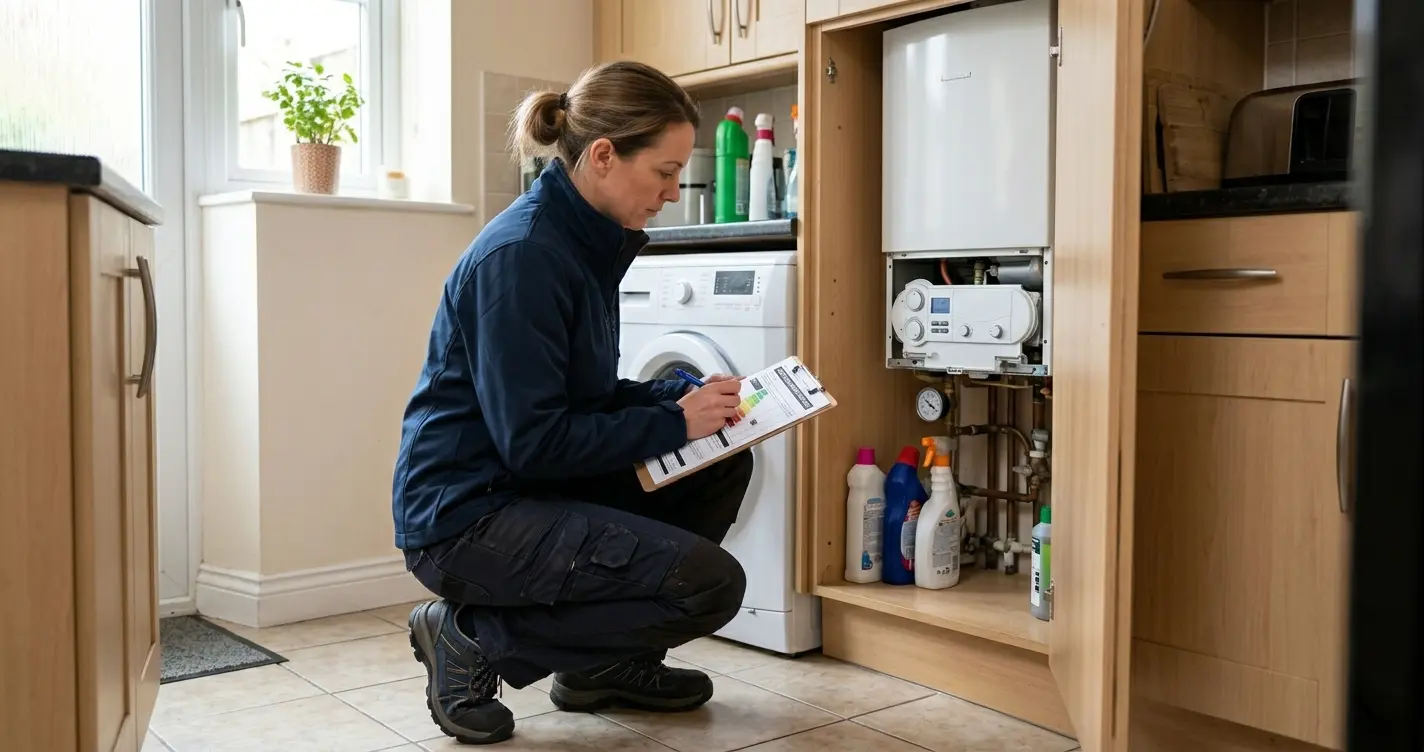
A qualified energy assessor visits your property and records details about the building fabric and services. They will look at walls, windows, the roof, heating systems, hot water, and lighting.
The visit usually takes 30 to 60 minutes. The assessor enters the data into approved software (RdSAP for existing homes, SAP for new builds) which calculates the energy rating.
You receive the certificate within a few days. It is also automatically lodged on the national EPC register, where anyone can look it up.
How long is an EPC valid?
An EPC is valid for 10 years from the date of issue. You can use the same EPC for multiple sales or tenancies within that period, as long as it has not expired.
You might choose to get a new EPC before the old one expires if you have made significant energy improvements and want to show a better rating.
Check if your property has a valid EPC
How to find an existing EPC
Every EPC lodged since 2008 is on the national register. You can look up your property at find-energy-certificate.service.gov.uk using your postcode.
If your property does not have a valid EPC, or the existing one has expired, you will need to book a new assessment.